
It is a frustrating feeling when your hair feels like straw after shower time, dry and rough right when it should feel clean and soft.
The shower is supposed to leave your hair better, not worse, so something in the water or your routine may be pulling moisture out faster than it goes in.
Most of the time it is a mix of hard water, chlorine, and habits like hot water and overwashing.
At Lucinn, we see the water side of this every day, and filtering it is often the missing piece people overlook.
- Straw like hair after a shower is usually a moisture problem, where your hair loses more water than it keeps.
- Hard water minerals and chlorine are common hidden factors that can coat and dry out your hair.
- Harsh sulfate shampoos, overwashing, skipping conditioner, and hot water can make it worse.
- Filter your shower water to help reduce the chlorine and minerals at the source.
What Straw-Like Hair Actually Means
Before fixing it, it helps to know what is happening to the strand. Healthy hair holds moisture inside and keeps its outer layer smooth. Straw like hair has lost that balance.
When the outer layer of the hair, called the cuticle, gets roughed up, it can lift and let moisture escape. The strand then feels dry, rough, and brittle, and it tends to tangle and break more easily.
Anything that lifts the cuticle or strips natural oils can leave your hair feeling like straw.
- Dryness and a rough, coarse texture
- Dullness with no shine
- Frizz, tangles, and knots
- Breakage and split ends
Straw-Like Hair Causes
There are a handful of usual suspects. Often it is more than one working together, so it helps to look at all of them.
1. Hard Water and Chlorine
This is the cause most people miss. Hard water can leave calcium and magnesium deposits on your hair, and chlorine from treated tap water can strip away natural oils.
Together, they can coat the strand, make your conditioner less effective, and leave hair feeling dry and looking brassy, no matter how good your products are.
2. Your Washing Routine
How you wash matters as much as what is in the water. Small habits add up over time and can quietly dry out your hair.
- Washing too often can strip the natural oils your hair needs.
- Sulfate shampoos clean aggressively and can over dry some hair types.
- Skipping conditioner can leave the cuticle rough and unprotected.
- Hot water can lift the cuticle and pull out moisture.
3. Heat and Chemical Stress
Styling tools and treatments take a toll, especially layered on top of poor water.
Blow dryers, flat irons, and curling irons on high heat can dry and weaken the strand.
Frequent coloring, bleaching, and over detangling wet hair add even more stress.
Hair Feels Like Straw: Common Causes and Quick Fixes
Here is a fast way to match the cause to the fix so you know where to start.
| Cause | Why It Dries Hair | Quick Fix |
|---|---|---|
| Hard water and chlorine | Can coat and strip the strand | Install a shower filter |
| Over washing | Removes natural oils | Wash less often |
| Sulfate shampoo | Cleans too aggressively | Switch to sulfate free |
| No conditioner | Leaves cuticle rough | Condition every wash |
| Hot water | Lifts the cuticle | Rinse with cooler water |
| Heat styling | Dries out moisture | Lower heat, use less often |
When It Could Be a Health Issue
Most of the time straw like hair is about moisture and water, not your health. But if you have fixed your routine and water and nothing changes, it is worth a check.
Dry, brittle hair can sometimes be a sign of an underlying condition like an underactive thyroid, a calcium related issue, or poor nutrition.
This is not common, but if your hair stays straw like despite good care, see a doctor or dermatologist. They can test for anything underlying and rule it out.
How to Get Soft Hair Back After Every Shower

Here is the routine that many people find helps. Start with the water, then layer in the product and habit changes.
Step 1: Look at Your Water
Since hard water and chlorine are common hidden drivers, treating the water often makes a noticeable difference.
A shower filter reduces those minerals and chlorine before they touch your hair, so every rinse adds less to the problem.
- Helps filter out chlorine, heavy metals, and scale causing minerals.
- Helps protect color treated hair from fading and looking brassy.
- Installs in about three minutes on any standard fitting, no tools.
- Lets your shampoo and conditioner work as intended.
Step 2: Adjust Your Products and Habits
With cleaner water in place, a few simple swaps can lock in the results. None of these are expensive or complicated.
- Use a gentle sulfate free shampoo and wash less often.
- Condition every single wash, focusing on mid lengths and ends.
- Add a moisturizing hair mask once a week for deep hydration.
- Rinse with cooler water to help seal the cuticle.
- Turn down the heat on styling tools and use them less.
Why Water First Works Well
You can buy every mask and serum on the shelf, but if your water is high in chlorine and minerals, you are working against it every shower.

Filtering the water reduces the daily source of dryness, which is why many people notice softer hair within a week or two.
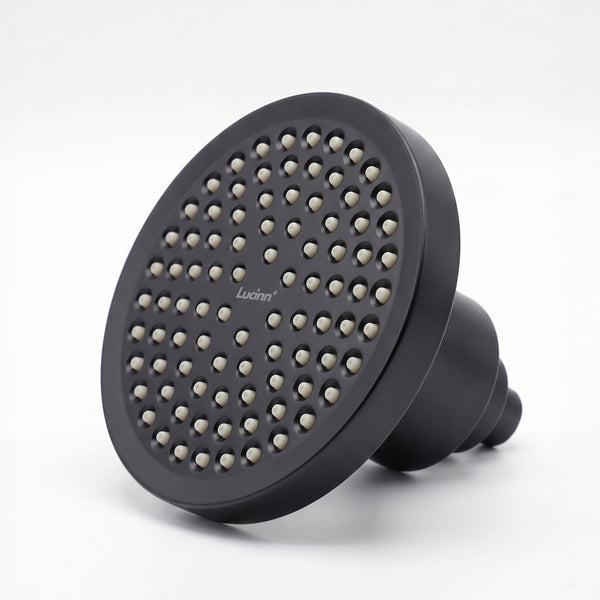
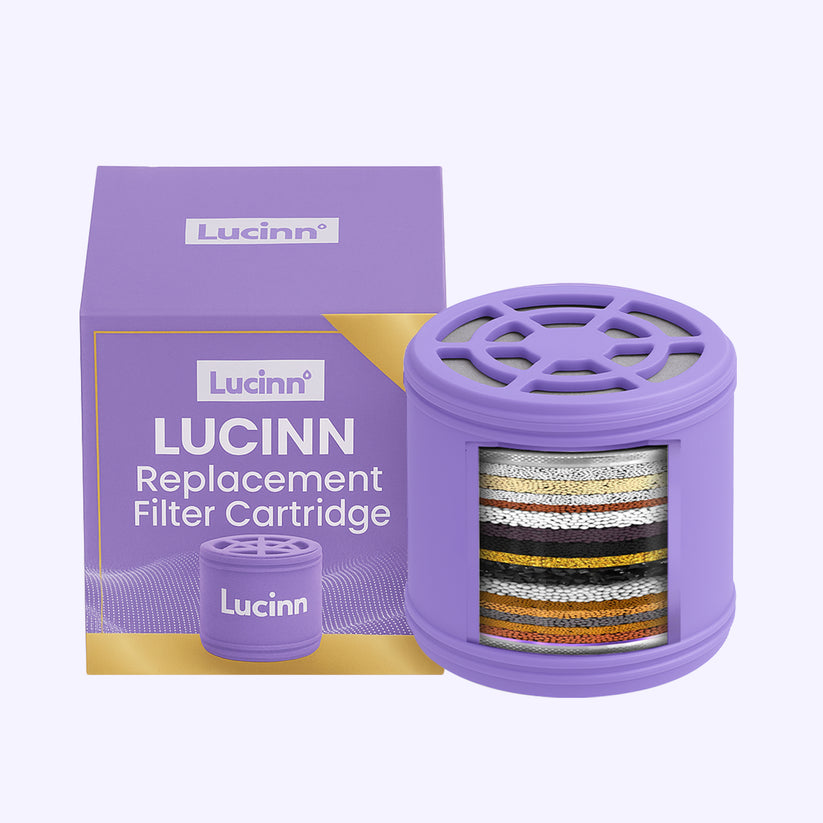
Lucinn showerheads use a multi stage cartridge with KDF-55 to help with metals, activated carbon to help with chlorine, and calcium sulfite to help handle chlorine in hot water.
Start With the Water
Reduce the chlorine and minerals in your shower so your products can finally do their job.

Conclusion
When your hair feels like straw after a shower, it is usually losing more moisture than it holds, and the fix is to find what is pulling that moisture out.
Often it is a combination of hard water, chlorine, harsh shampoos, hot water, and heat styling. Start by looking at the water, then add gentle products, a weekly mask, and cooler rinses.
If nothing helps after that, check in with a doctor to rule out a health cause. Treat the source, especially your shower water, and soft, healthy looking hair can come back.
Frequently Asked Questions
Why does my hair feel like straw after I shower?
How do I fix straw like hair fast?
Does hard water make your hair feel like straw?
Can a shower filter help dry, straw like hair?
When should I see a doctor about dry, brittle hair?