

- Hard water contains high levels of calcium and magnesium that can leave residue on baby skin.
- Hard water effects on baby skin include dryness, rough texture, irritation, and eczema flare-ups.
- Babies have thinner, more sensitive skin, making them more vulnerable to mineral buildup.
- Simple changes like shorter baths, gentle cleansers, and thick moisturizers can help.
- A filtered shower for baby skin may reduce mineral exposure and improve skin comfort.
Understanding Hard Water Effects on Baby Skin
Hard water is water that contains high amounts of minerals like calcium and magnesium. These minerals aren't harmful to drink, but they can affect how water interacts with your baby's skin during bath time.
Baby skin is thinner and loses moisture faster than adult skin. When mineral residue stays on the surface, it can weaken the skin barrier and lead to dryness or irritation.
What Makes Hard Water Different From Soft Water
| Water Type | What It Does | Effect on Baby Skin |
|---|---|---|
| Hard water | Contains more dissolved minerals; leaves chalky buildup; makes soap harder to rinse off | Can leave residue that dries and irritates skin |
| Soft water | Contains fewer minerals; allows soap to rinse away more easily | Tends to leave skin feeling smoother |
When soap mixes with hard water, it creates a film called soap scum. This film can cling to your baby's skin and make it harder for moisture to stay locked in.
What Causes Hard Water Effects on Baby Skin

Hard water effects on baby skin happen because minerals interfere with the natural protective layer of the skin. This outer layer is responsible for holding in moisture and keeping irritants out.
When mineral residue stays on the skin, it increases moisture loss, changes the skin's natural pH, can trap soap particles against the skin, and may trigger inflammation in sensitive babies. Over time, repeated exposure can make the skin barrier weaker. This is why some babies seem fine at first but develop dryness or irritation weeks later.
Common Hard Water Effects on Baby Skin
Hard water doesn't affect every baby the same way. Some may have mild dryness, while others experience more noticeable irritation.
Dry and Rough Texture
One of the most common hard water effects on baby skin is dryness. After a bath, your baby's skin may feel tight, flaky, or slightly rough. You might notice skin that feels like sandpaper, dry patches on legs or arms, or moisturizer that doesn't seem to last long. This happens because minerals prevent the skin from absorbing and keeping moisture properly.
Skin Irritation and Redness
Hard water can leave residue that irritates sensitive skin. Babies may become fussy after baths if their skin feels itchy or uncomfortable. Signs of irritation include mild redness, small bumps, and scratching or rubbing skin against clothing. This irritation is usually not dangerous, but it can be uncomfortable and persistent.
Hard Water Baby Eczema
A 2021 systematic review and meta-analysis found a connection between domestic water hardness and atopic dermatitis, also called eczema, in early life. Hard water baby eczema flare-ups may happen because minerals damage the protective skin barrier.
If your baby already has eczema, hard water can make flare-ups more frequent, increase dryness and itching, and slow down skin healing. Managing mineral exposure can be an important step in controlling symptoms, alongside whatever your pediatrician has already recommended.
Baby Acne and Hard Water
Baby acne is usually caused by hormones and goes away on its own. However, mineral buildup can sometimes worsen clogged pores or create small irritation bumps. If bumps appear mostly after baths and improve when skincare changes are made, hard water may be contributing.
Is It Safe to Bathe a Baby in Hard Water?
Many parents wonder whether hard water is safe for bathing a baby every day. In general, hard water isn't toxic or dangerous for infants.
However, safety and comfort are different things. While hard water is safe to use, it may not be ideal for babies with sensitive or eczema-prone skin. If your baby's skin becomes consistently dry or irritated, adjusting bath habits or filtering the water can help reduce discomfort.
Signs Hard Water Is Affecting Your Baby's Skin
Recognizing patterns can help you connect skin changes to water quality. The symptoms often show up after bath time.
| Sign | What It May Mean |
|---|---|
| Skin feels drier right after bathing | Mineral residue may be pulling moisture from the skin |
| White residue on the tub or bath toys | A clear indicator your home has hard water |
| Eczema flare-ups that don't improve with creams | Water hardness may be working against your skincare routine |
| Rough patches that keep returning | Repeated mineral exposure may be weakening the skin barrier |
If these signs match what you're seeing, hard water effects on baby skin may be part of the problem. You can also check the broader signs your home has hard water to confirm what you're dealing with beyond the bathtub.
How Hard Water Effects on Baby Skin Get Worse Over Time
Mineral exposure adds up over repeated baths. Without proper care, the skin barrier can slowly weaken. Certain habits can make symptoms worse: long, hot baths, using strong or heavily scented soaps, scrubbing the skin too firmly, and skipping moisturizer after bathing.
Hot water increases moisture loss, and harsh cleansers react more strongly with minerals. Small daily changes can prevent long-term irritation.
One Less Thing Working Against Baby's Skin
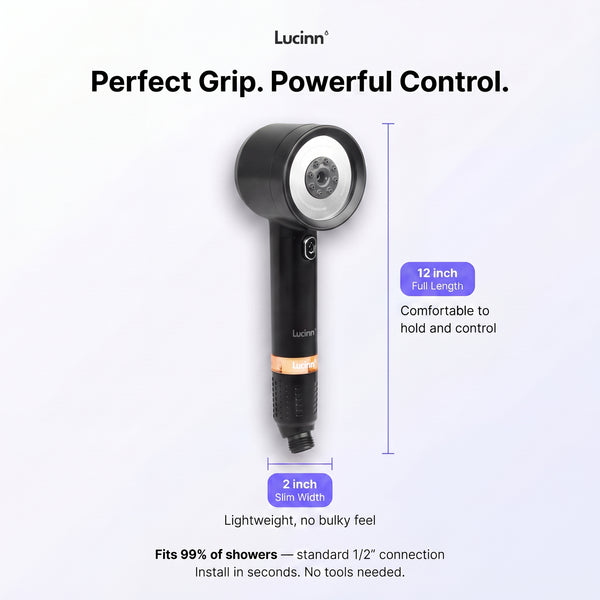
A filtered shower for baby skin won't fully soften hard water, but it can reduce chlorine and certain impurities before they reach your baby's delicate skin.
Shop Lucinn Filtered ShowerheadsHow to Reduce Hard Water Effects on Baby Skin

Reducing hard water effects on baby skin doesn't require complicated routines. A few consistent steps can make a noticeable difference.
Adjust Bath Time Habits
Bath routines play a big role in protecting the skin barrier. Keep baths under 10 minutes, use lukewarm water instead of hot, use only a small amount of gentle cleanser, and pat dry with a soft towel instead of rubbing. Shorter baths mean less mineral exposure.
Choose a Gentle Baby Cleanser
Traditional soap reacts strongly with hard water and creates more residue. Look for soap-free, fragrance-free cleansers labeled for sensitive baby skin, such as pH balanced baby washes, syndet bars, or products designed for eczema-prone skin. These formulas help reduce irritation and leave less buildup behind.
Repair the Skin Barrier With Moisturizer
Moisturizing right after the bath helps trap hydration before it escapes. Apply a thick cream or ointment within three minutes of drying, look for ingredients like ceramides or glycerin, and use ointments for very dry or eczema-prone skin. Lotions are lighter but may not be enough in hard water areas.
Consider a Filtered Shower for Baby Skin
A filtered shower for baby skin can improve overall water quality before the water touches your child. Most standard shower filters are designed to reduce chlorine and certain impurities, while true hard water softening that significantly lowers calcium and magnesium usually requires a dedicated softening system.
Some parents choose brands like Lucinn, known for premium shower filters available in wall-mounted or handheld options. While results can vary depending on your local water hardness and the type of filtration used, improving overall water quality may help support healthier skin, especially for babies with sensitivity or eczema. For families already managing a diagnosed condition, cleaner shower water designed around eczema-prone skin can fit alongside whatever routine your pediatrician has set.
Best Lucinn products for baby bath time
 Gentle, controlled rinsing Best for baby baths since you can direct lukewarm, filtered water exactly where you need it without spraying their face. Shop Handheld Showerhead
 Whole-bathroom filtering Best for the main family bathroom so filtered water is the default for every bath, not just baby's. Shop Wall-Mounted Showerhead
 Consistent filter upkeep Best for keeping filtration steady through months of nightly baths without forgetting a swap. Shop Filter Cartridges
More Lucinn Products for a Gentler Bath Time
If bath time pressure swings from a trickle to a blast, a couple more pieces can help round out a calmer setup for both of you.
Round out your bath time setup
 Steady, gentle pressure Best for keeping water flow calm and predictable, which makes it easier to hold a consistent lukewarm temperature during baby's bath. Shop SmartFlow Restrictor
Preventing Hard Water Baby Eczema Flare-Ups
If your baby already has eczema, prevention becomes even more important. Managing mineral exposure can be part of a broader skin care plan.
Helpful strategies include bathing every other day instead of daily if dryness is severe, using prescribed creams as directed by a pediatrician, keeping the home air slightly humid during dry seasons, and washing baby clothes in fragrance-free detergent. Combining good skincare with cleaner water can reduce flare-ups and improve comfort.
When to See a Doctor About Hard Water Effects on Baby Skin
Most hard water effects on baby skin are mild and manageable at home. However, medical advice is important if symptoms become more serious.
Contact your pediatrician if you notice cracked or bleeding skin, signs of infection such as oozing or swelling, severe itching that disrupts sleep, or a rash that spreads or doesn't improve. A doctor can confirm whether the issue is eczema, allergy, or another skin condition.
Frequently Asked Questions
Can hard water cause skin irritation in babies?
Is hard water safe for bathing a baby?
How do you fix skin damage from hard water?
Does hard water make baby acne worse?
Why does my 3-month-old's skin feel like sandpaper?
The Bottom Line
Hard water effects on baby skin are common, especially in areas with high mineral content. While hard water is safe for bathing, it can lead to dryness, irritation, and eczema flare-ups if the skin barrier becomes weakened.
Simple changes like shorter baths, gentle cleansers, thick moisturizers, and improving overall water quality can make a real difference over time. Pair these habits with whatever your pediatrician has already recommended, especially if eczema is involved.
For a simple daily upgrade, start with a Lucinn Pro filtered showerhead in whichever style fits your bathroom, wall-mounted or handheld, and give your baby's skin one less thing to fight at bath time.