

- Postpartum hair loss usually peaks around 3 to 4 months after giving birth.
- Shedding looks worse in the shower because loose hairs let go all at once.
- Washing 2 to 3 times a week works well for most hair types.
- Gentle shampooing and careful drying reduce extra breakage on top of normal shedding.
- Clean, filtered shower water can support a calmer scalp and softer-feeling strands while hormones rebalance.
Understanding Postpartum Hair Loss Before Changing Your Shower Routine

Postpartum hair loss is driven by a drop in estrogen after pregnancy. During pregnancy, higher hormone levels keep more hair in the growth phase than usual, which is why hair often feels thicker and fuller for nine months.
After birth, those hormone levels fall back toward normal. Many hairs shift into the shedding phase at the same time, which is why brushing and washing suddenly pull out more strands than you're used to.
When Does Postpartum Hair Loss Peak?
For most people, shedding peaks around 3 to 4 months after giving birth. Johns Hopkins Medicine notes that hair generally returns to its normal growth cycle within 6 to 12 months postpartum.
Why Does It Look Worse in the Shower Specifically?
The shower is where loose hairs finally let go. Strands already sitting in the resting phase come out together the moment you massage your scalp or work in conditioner.
Water also makes each strand heavier and more fragile. If you scrub too hard or detangle roughly while it's wet, you can add real breakage on top of the shedding that was already happening.
Does Hard Water Make Postpartum Shedding Worse?
Hard water doesn't cause postpartum hair loss, but mineral buildup from unfiltered shower water can leave already-fragile postpartum hair feeling dry and brittle. Many people switch to a filtered shower setup during this stretch simply to take one variable off the table while their hair recovers.
Postpartum Hair Loss Shower Tips for Washing the Right Way
Small changes in your routine protect fragile strands and make wash days less stressful. The goal isn't to stop the shedding (you can't), it's to stop adding extra breakage to it.
How Often Should You Wash During Postpartum Shedding?
Washing 2 to 3 times a week works well for most people. If your scalp gets oily quickly, wash more often to keep follicles clear.
Skipping washes doesn't slow the shedding down. Avoiding shampoo for too long can actually lead to clogged follicles and scalp irritation, which works against regrowth rather than helping it.
Pre-Shower Prep That Reduces Breakage
Before you step into the shower, spend a couple of minutes gently detangling dry hair. This removes loose strands before they collect in the drain mid-wash.
- Use a wide-tooth comb instead of a tight bristle brush
- Start from the ends and work your way up
- Skip tight ponytails or buns right before washing
- Smooth a small amount of lightweight oil onto dry ends if they feel rough
Choosing a Shampoo for Postpartum Hair
The right shampoo supports scalp health without stripping moisture. During postpartum shedding, the goal is balance, not harsh cleansing. Look for formulas that are sulfate-free and lightweight, designed for thinning or fragile hair, and infused with scalp-friendly ingredients like biotin, niacinamide, caffeine, or rosemary.
Focus shampoo on your scalp rather than dragging it down the full length of your hair. Your ends usually only need the rinse that flows down from there.
| Scalp type | What to look for | What to avoid |
|---|---|---|
| Oily, gets greasy fast | Lightweight, sulfate-free clarifying formula | Heavy conditioners applied near the roots |
| Dry or flaky | Hydrating, fragrance-light formula | Daily washing with harsh sulfates |
| Sensitive or irritated | Fragrance-free, scalp-soothing ingredients | Very hot water and high-fragrance products |
| Thinning all over | Biotin, caffeine, or niacinamide-infused formulas | Silicone-heavy products that weigh hair down |
How to Wash Gently Without Making Shedding Worse
Your technique matters just as much as your products. Gentle handling reduces stress on strands that are already fragile from hormonal shedding.
Use Lukewarm Water, Not Hot
Hot water dries out both hair and scalp. Lukewarm water helps maintain natural moisture and keeps strands more flexible while you wash, which means less snapping when you run your fingers through wet hair.
Massage With Fingertips, Not Nails
Massage your scalp gently with your fingertips while shampooing. Avoid piling hair on top of your head, since twisting wet strands into a knot adds tension right where postpartum hair is weakest.
Condition From Mid-Length Down
Apply conditioner from mid-length to ends only, and leave it on for 1 to 3 minutes before rinsing well with lukewarm water. Heavy masks can weigh down fine postpartum hair, so save deep conditioning treatments for when your hair feels especially dry.
| Step | What to do | Why it helps |
|---|---|---|
| 1. Detangle dry | Wide-tooth comb, ends to roots | Removes loose strands before they tangle wet |
| 2. Rinse | Lukewarm water, full saturation | Prepares hair without stripping moisture |
| 3. Shampoo | Scalp only, fingertip massage | Cleans roots without dragging on fragile lengths |
| 4. Condition | Mid-length to ends, 1 to 3 minutes | Softens ends without weighing down roots |
| 5. Rinse again | Thorough, lukewarm water | Prevents residue that can make hair feel heavy |
After-Shower Care for Postpartum Hair Loss

What you do after washing matters just as much as how you wash. Wet hair is more elastic and far more prone to snapping than dry hair, which makes the first few minutes out of the shower a high-risk window for breakage.
How to Stop Losing Extra Hair After a Shower
You can't fully stop hormonal shedding, but you can prevent the extra breakage layered on top of it.
- Gently squeeze out excess water rather than wringing it
- Pat dry with a microfiber towel or soft cotton T-shirt
- Avoid rubbing or twisting hair while it's wet
- Detangle carefully, starting at the ends and working up
Let hair air dry when you can. If you reach for heat tools, keep them on a low setting and use a heat protectant first.
Skip Tight Styles on Wet Hair
Avoid tight buns or ponytails while hair is still wet. Tight styles strain the roots and can worsen thinning around the hairline, which is already one of the more visible areas during postpartum shedding.
Common Shower Mistakes That Make Postpartum Hair Loss Look Worse
Sometimes it isn't the shedding itself but the habits built around it that cause extra damage. A few small swaps go a long way.
| Common mistake | Gentler swap |
|---|---|
| Using very hot water | Lukewarm water for the whole wash |
| Brushing aggressively when soaking wet | Wide-tooth comb, dry detangling first |
| Skipping conditioner completely | Lightweight conditioner on mid-length to ends |
| Applying heavy oils directly to the scalp | A small amount of lightweight oil on dry ends only |
| Wrapping hair tightly in a towel | Gentle squeeze with a microfiber towel |
Gentle care helps fragile regrowth stay intact. If you start noticing soft baby hairs along your hairline, that's a sign new strands are already coming in.
Why Clean Water Matters During Postpartum Recovery
Your scalp is already adjusting to a major hormonal shift, so it's a good time to remove other sources of irritation where you can. Unfiltered shower water can carry chlorine, sediment, and mineral buildup that leaves already-fragile postpartum hair feeling rougher and drier than it needs to.
A premium shower filter, like the wall-mounted or handheld options from Lucinn, helps reduce that daily exposure so your scalp has one less thing working against it while hormones rebalance.
Give Postpartum Hair One Less Thing to Fight
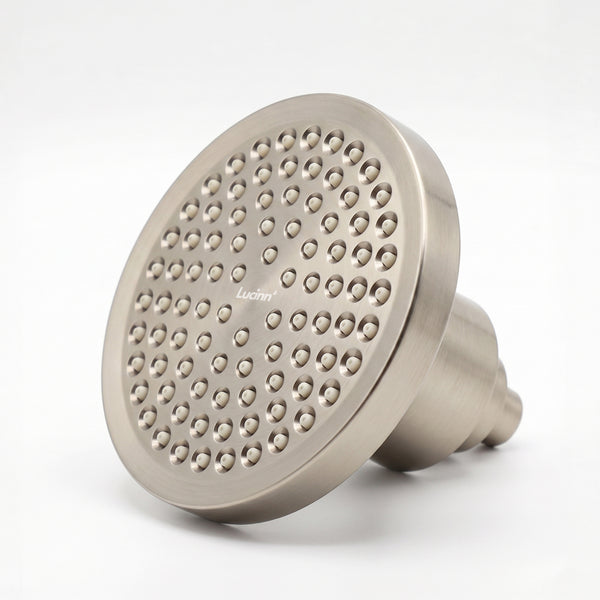
If your hair already feels fragile from postpartum shedding, a filtered showerhead removes chlorine, sediment, and other impurities before they reach your scalp.
Shop Lucinn Filtered ShowerheadsLucinn Recommendations for a Gentler Postpartum Shower Routine
Choose the option that fits how you currently shower. Each recommendation below uses one image and one CTA button, so you get a clear next step without repeated links.
Best Lucinn products for postpartum hair care
 Everyday filtered rinsing Best for hands-free daily washing when your hair already feels fragile and you want a gentler rinse without changing your routine. Shop Rain Showerhead
 Targeted scalp rinsing Best for gently rinsing the scalp and hairline without dragging on fragile lengths, especially helpful one-handed with a newborn nearby. Shop Handheld Showerhead
 Consistent filter upkeep Best for keeping your filtered-shower routine going through the months your hair needs it most. Shop Filter Cartridges
More Lucinn Products for a Gentler Postpartum Routine
If you're setting up a new shower routine from scratch, postpartum, moving, or upgrading an older bathroom, here are a few more pieces that round out a low-irritation setup.
Round out your gentle-shower setup
 Steady, gentle pressure Best if your current shower pressure swings between scalding and weak, which makes gentle handling harder during postpartum washes. Shop SmartFlow Restrictor
 Easy wall-mount setup Best for bathrooms that need a fresh shower arm before installing a wall-mounted filtered showerhead. Shop Wall-Mount Shower Arm
Nutrition and Overall Support for Healthier Hair
While shower habits matter, your body also needs the right nutrients to grow strong hair. After pregnancy, iron and certain vitamin levels can run lower than usual, and that shows up in your hair before it shows up anywhere else.
Low iron is one of the most common deficiencies linked to postpartum hair shedding, and GoodRx explains that vitamin D and B12 can also play a supporting role. If shedding feels extreme or lasts longer than a year, talk to your healthcare provider about testing.
Staying hydrated and eating balanced meals with protein, leafy greens, and healthy fats supports regrowth from the inside. Gentle scalp massage during washing can also help circulation, and it costs nothing extra to add to a routine you're already doing.
Frequently Asked Questions
How to stop postpartum hair loss fast?
What deficiency causes postpartum hair loss?
Is it normal to lose clumps of hair in the shower after pregnancy?
When does postpartum hair loss stop?
Should I wash my hair less to stop postpartum shedding?
The Bottom Line
Postpartum hair loss can feel overwhelming, especially when you see extra strands collecting in the shower. With the right postpartum hair loss shower tips, you can protect fragile hair, cut down on avoidable breakage, and give your scalp the gentlest possible environment while hormones find their footing again.
Simple changes like washing 2 to 3 times a week, handling wet hair gently, and rinsing with clean, filtered water can make a real difference over the months ahead.
For a simple daily upgrade, start with the Lucinn Pro Filtered Showerhead and choose the wall-mounted or handheld option that fits your current shower setup.