
If you have ever wondered what is TDS in water, it is simply a measure of everything dissolved in your water that is not a water molecule, from helpful minerals to unwanted metals.
The number gives you a quick snapshot of your overall water quality. A high reading is not automatically a problem, but it is a signal to look closer at what those dissolved solids actually are.
At Lucinn, we focus on the part of TDS that affects your shower, like hard water minerals, chlorine, and metals that can dry out your skin and hair.
- TDS means total dissolved solids, the minerals, salts, and metals dissolved in your water, measured in ppm.
- The EPA recommends under 500 ppm for drinking, with 300 to 500 ppm often seen as the sweet spot.
- A TDS meter shows the amount but not the type, so pair it with a full water test.
- High TDS can mean hard water, which is linked to scale, dull hair, dry skin, and spotty dishes.
What Total Dissolved Solids Actually Are

TDS is the combined weight of all the tiny particles dissolved in your water. Water is a strong solvent, so as it moves through the ground and your pipes, it picks things up along the way.
These dissolved solids fall into two groups, organic and inorganic. They are too small to see or filter with a basic screen, which is why they stay dissolved in the water you drink and shower in.
Common ones include calcium, magnesium, sodium, potassium, chlorine, fluoride, iron, copper, and lead.
- Calcium and magnesium are the minerals that make water hard.
- Sodium and potassium often come from natural sources and treatment.
- Chlorine is added at treatment plants to help kill bacteria.
- Lead and copper can leach in from old plumbing pipes.
Where Does TDS Come From
Your TDS reading is the result of everything your water has touched. The sources are a mix of natural and man made.
Naturally, water absorbs minerals from rocks, soil, springs, lakes, and rivers as it travels.
On the man-made side, treatment plants add chlorine, farm runoff can bring in pesticides and herbicides, and aging pipes can leach metals like lead.
Some bottled waters even add minerals back on purpose for taste.
What Is a Good TDS Level in Water

This is the question most people care about, so here is the straight answer with a chart. The type of solid matters as much as the total, but the number is a useful starting point.
| TDS Level (ppm) | Rating | What It Means |
|---|---|---|
| Less than 50 to 250 | Low | Very pure but may taste flat, low in minerals |
| 300 to 500 | Ideal | The sweet spot, has minerals without tasting off |
| 600 to 900 | Not great | Consider a stronger filtration system |
| 1000 to 2000 | Poor | Not recommended for drinking |
| Over 2000 | Very poor | Most household filters cannot properly treat this |
A low reading is not harmful, it just means very few minerals, which can make water taste flat. A reading over 500 ppm is your cue to test for specific contaminants like lead.
How to Measure TDS in Your Water
Testing is cheap and fast, which is why TDS is such a popular first check. You have a couple of options depending on how much detail you want.
- A handheld TDS meter gives you a ppm reading in seconds for a few dollars.
- A home water test kit shows which contaminants are present, not just the total.
- A certified lab test gives the most complete breakdown of metals and chemicals.
- Your water utility can usually provide a water quality report on request.
Why a Meter Alone Is Not Enough
A TDS meter tells you how much is dissolved, but not what. Water with 250 ppm of healthy minerals is very different from 250 ppm that includes lead.
For peace of mind, use the meter as a quick screen and a full test to confirm what is actually there.
Why TDS Matters for Your Skin, Hair, and Home
High TDS is often a sign of hard water, and that can affect more than taste. The same calcium, magnesium, chlorine, and metals that raise your reading also show up in your shower and around your house.
- Hard water minerals can build scale in pipes and shorten appliance life.
- Calcium and magnesium can leave hair dull, dry, and prone to buildup.
- Chlorine can strip your skin of natural oils, which may lead to dryness.
- Metals and minerals can leave spots on dishes and fade laundry.
The Shower Connection
When your water is high in chlorine and hard minerals, every shower coats your skin and hair in them.
For some people, that can lead to dryness, frizz, a brassy look, and irritation over time.
Filtering those specific solids at the showerhead can help support your skin and hair without changing anything else about your routine.
How to Reduce TDS in Water
The right fix depends on whether you are treating drinking water or shower water. They are different jobs, so match the tool to the goal.
| Method | Best For | What It Does |
|---|---|---|
| Reverse osmosis | Drinking water | Pushes water through a membrane to remove most TDS |
| Distillation | Drinking water | Boils and condenses water, leaving solids behind |
| Deionization | High purity needs | Swaps ions to produce very pure water |
| Water softener | Whole home hard water | Reduces calcium and magnesium to help stop scale |
| Shower filter | Skin and hair | Targets chlorine, metals, and some minerals at the shower |
For drinking, reverse osmosis is the most thorough option. For your skin and hair, a shower filter is the practical choice because it tackles the chlorine and metals that can affect you most during a shower.
Where a Shower Filter Fits In
A shower filter is not meant to purify drinking water, and that is fine, because the concerns in the shower are different.
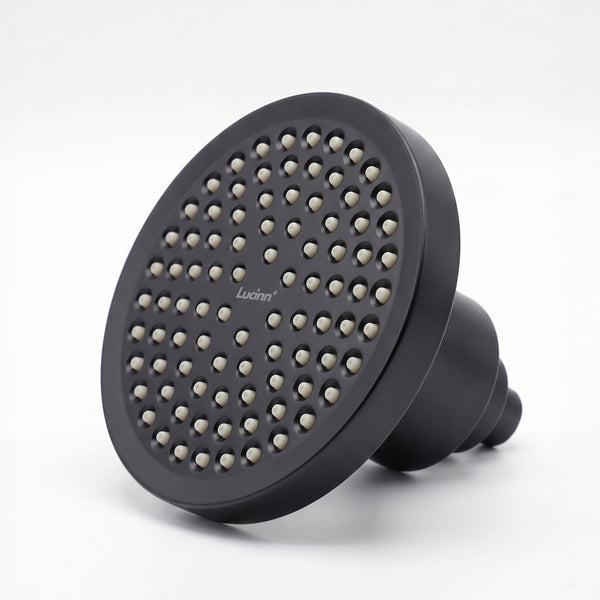
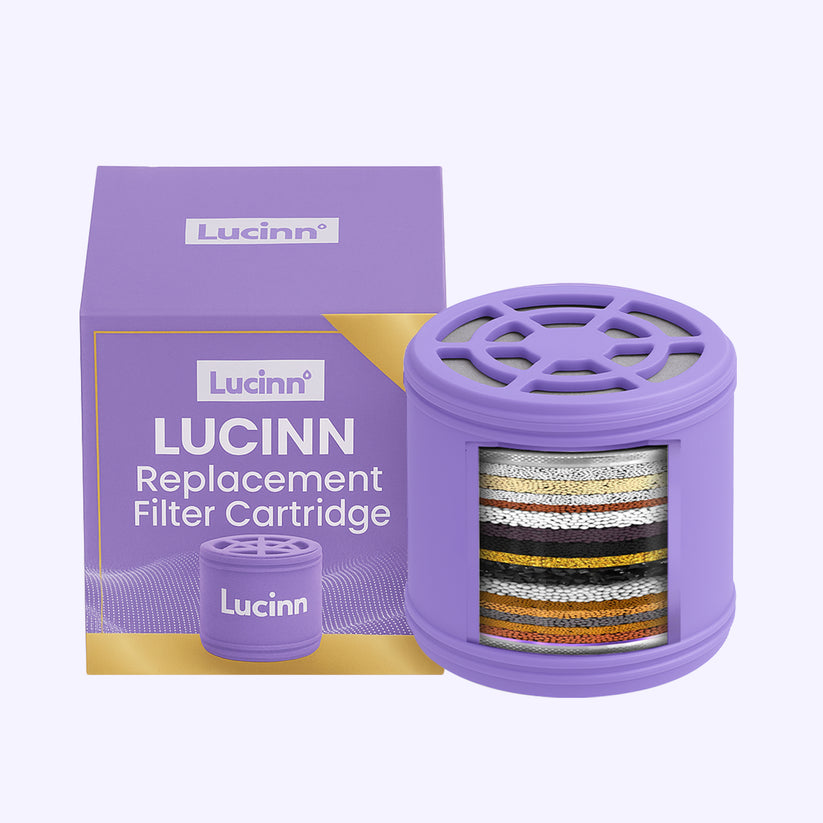
Lucinn showerheads use a multi stage cartridge with KDF-55 to help cut heavy metals and scale, activated carbon to help absorb chlorine and odors, and calcium sulfite to help handle chlorine in hot water.

It installs in about three minutes on any standard fitting and is built to keep your water pressure strong.
Filter the Shower Solids That Matter

A TDS meter checks your drinking water. A Lucinn filter targets the chlorine and metals in your shower water.
Shop Lucinn Pro Filtered ShowerheadsConclusion
Now that you know what TDS is in water, you can read your water with more confidence and pick the right fix.
TDS is the total dissolved solids, including minerals, salts, and metals, measured in ppm, and the EPA recommends staying under 500 for drinking water.
Remember that the type of solid matters as much as the number, so pair a meter with a full test. For drinking water, reverse osmosis or distillation lowers TDS the most.
To help support your skin and hair, a shower filter reduces the chlorine and metals that your shower puts on your body every day.
Frequently Asked Questions
What is a good TDS level for drinking water?
Is high TDS water bad for you?
Is low TDS water safe to drink?
Does a shower filter lower TDS?
How do I test the TDS in my water at home?